AI Summary
Teachers in Charleston, South Carolina, are experimenting with AI tools in classrooms to help students understand their limitations. As AI literacy becomes a priority, educators aim to balance the benefits of technology with the need for critical thinking skills.
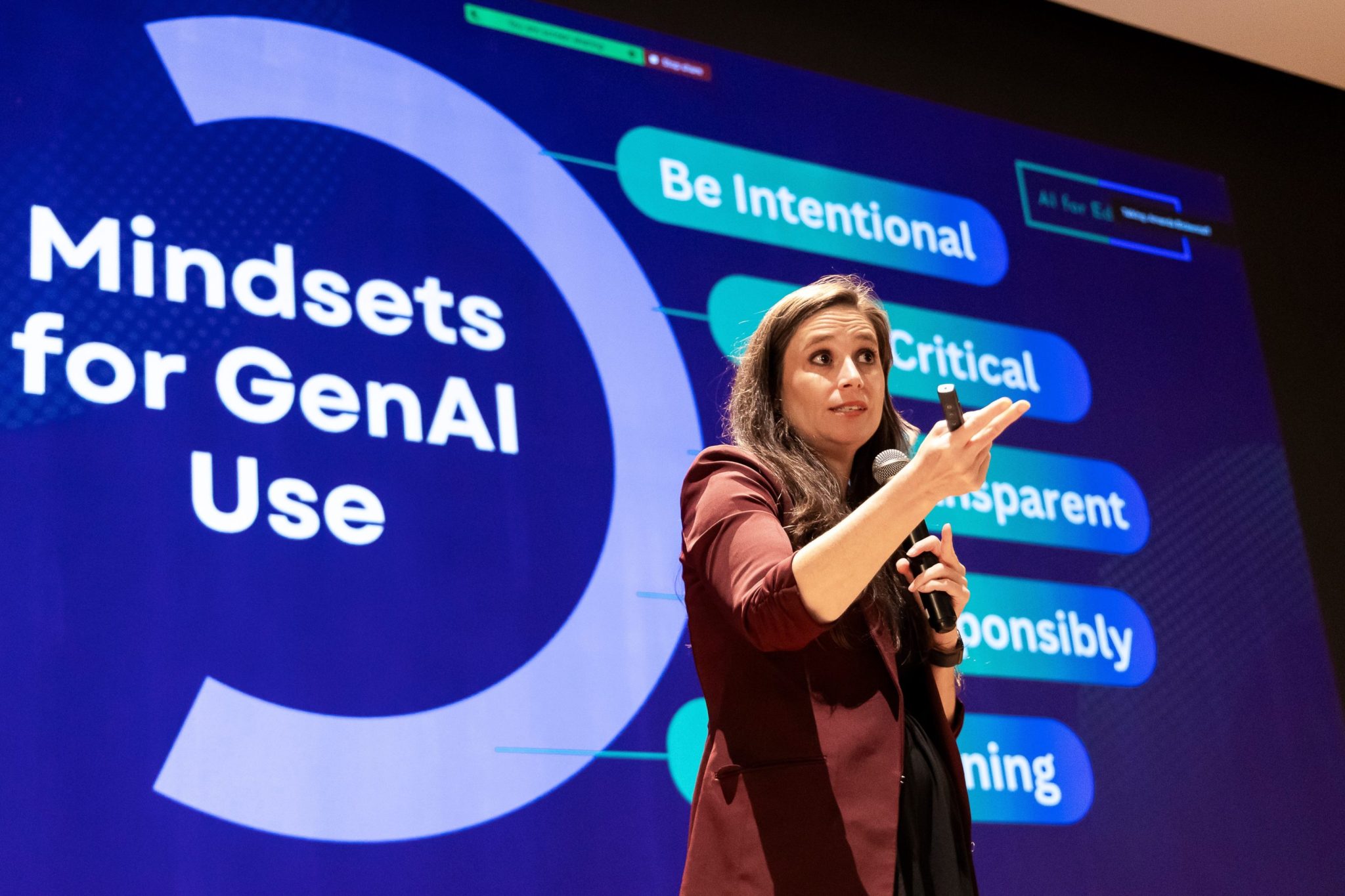
- A group of educators in Charleston, South Carolina, discussed integrating AI tools into classrooms to prepare for the new school year.
- During a demonstration, an AI-generated world map displayed numerous inaccuracies, highlighting the technology's limitations.
- Amanda Bickerstaff, founder of AI For Education, suggested using such demonstrations to teach students not to overly trust AI.
- Many U.S. public schools are shifting from banning AI to encouraging its use, aiming to educate students on its shortcomings.
- AI literacy is becoming a key focus for educators, with no standardized definition or approach currently in place.
- South Carolina's second-largest school district is developing its own AI policy, seeking input from teachers, students, and parents.
- A significant number of teenagers and teachers are using AI for schoolwork without formal training or understanding of the technology.
- As the school year begins, Charleston County School District will provide training for teachers and students on effective AI tool usage.
- The training will emphasize the importance of verifying information obtained from AI and understanding data privacy concerns.
- Utah has taken a statewide approach to AI education, creating a full-time position for an AI education specialist and requiring districts to develop AI policies by 2027.
- Other states are adopting varying approaches to AI in education, with concerns about equitable access to training in under-resourced districts.
- Educators emphasize the need to change perceptions about AI, encouraging students to use critical thinking rather than relying solely on technology for answers.
childrentrustai literacyeducationcritical thinking