AI Research
Aug 17, 2026
Eugene Fitzgerald discusses innovation in his new book and its implications for society
Aug 17, 2026
AI Summary
Eugene Fitzgerald, a professor at MIT, explores the complexities of innovation in his book, 'The Invisible Engine.' He emphasizes the need for a deeper understanding of how innovation occurs and how society can effectively invest in it, drawing from his extensive research experience and insights into the semiconductor industry.
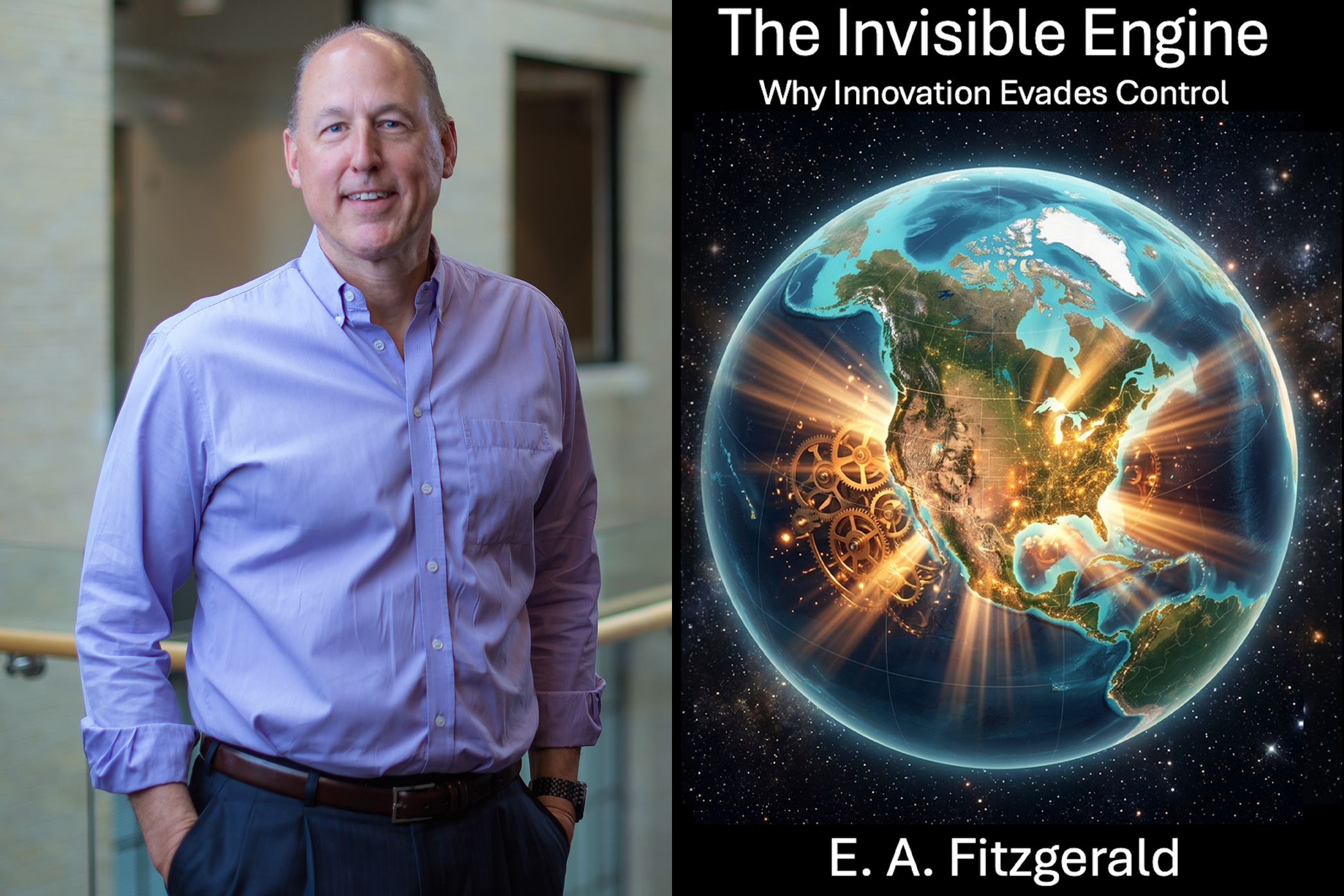
- Eugene Fitzgerald, a professor at MIT, authored 'The Invisible Engine: Why Innovation Evades Control,' addressing common misconceptions about innovation and its management.
- The book is based on Fitzgerald's decade-long work in international research programs, such as the MIT Masdar Institute and the MIT-Singapore Alliance, focusing on the intersection of science, economics, and industry.
- Fitzgerald defines the 'invisible engine' as a decentralized collective intelligence that leads to unexpected market successes, highlighting the role of entrepreneurs in navigating uncertainty.
- He discusses his experience at AT&T Bell Laboratories, where he co-invented strained silicon, illustrating the importance of commercialization alongside scientific discovery.
- Fitzgerald identifies three types of research investment: altruistic science, strategic research, and fundamental innovation, arguing that innovation is a process rather than just an idea.
- The book targets multiple audiences, including innovators, researchers, corporate leaders, and policymakers, aiming to enhance understanding of effective investment in innovation.
- Fitzgerald encourages policymakers to recognize the different streams of research investment and advocates for universities to foster environments that support collaborative innovation efforts.
innovationbreakthroughsvalue creationeugene fitzgeraldresearch