A team from MIT has created a system of small robotic boats that can autonomously assemble and reconfigure into various structures on water. This innovation, called FloatForm, aims to transform waterfronts into adaptable spaces for emergency response, public markets, and more.
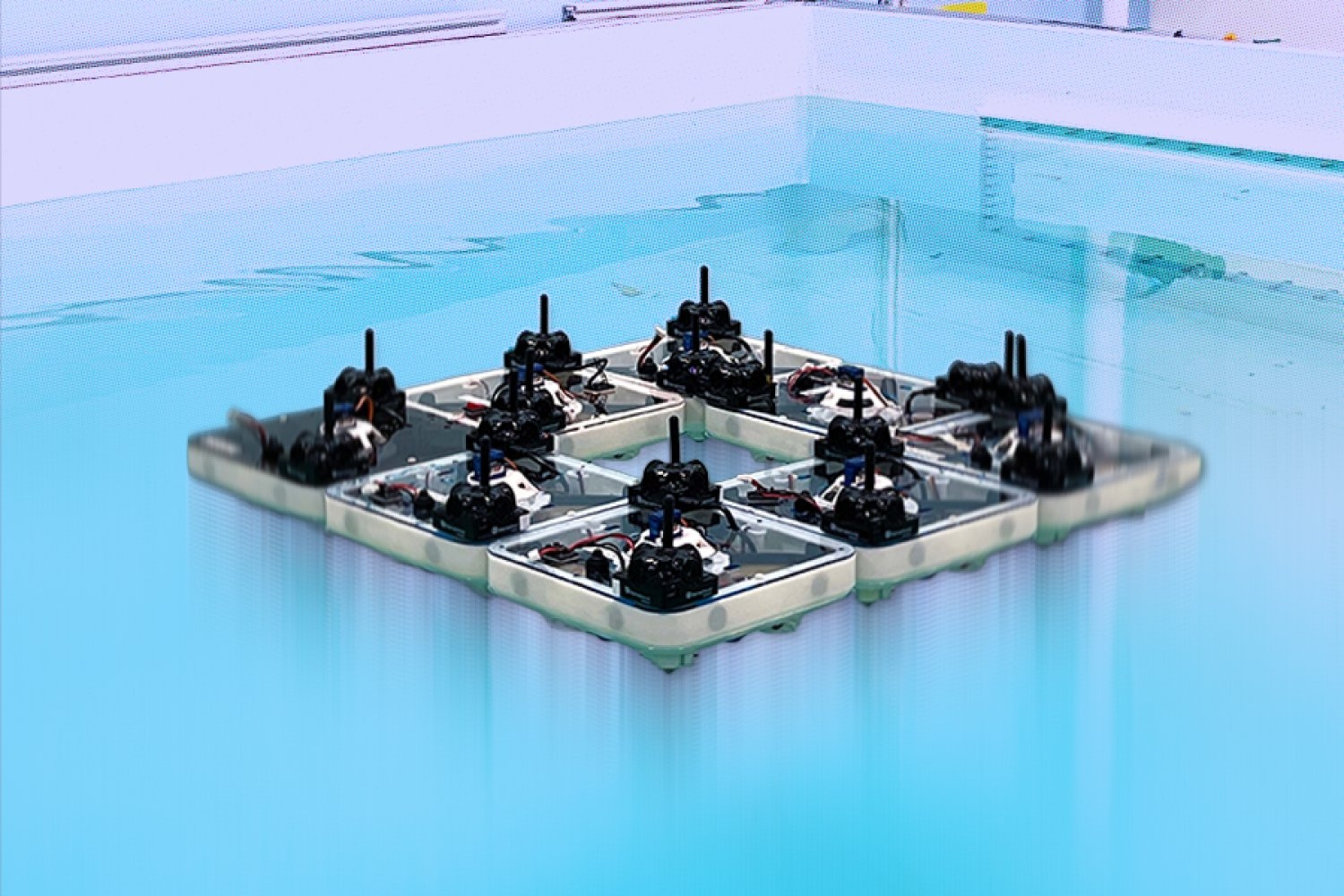
MIT researchers have developed FloatForm, a system of small robotic boats that can self-assemble into larger structures on water. Each boat measures 21 centimeters square and is equipped with thrusters, sensors, and magnetic latches, allowing them to operate with minimal human direction.
The project envisions a future where waterfronts serve as programmable extensions of urban environments, enabling the creation of temporary platforms, bridges, and other structures as needed. The research draws inspiration from biological systems, such as fire ants forming rafts, to enable decentralized coordination among the robots.
Experiments demonstrated that the robotic fleet could gather into target shapes, break apart, and reassemble efficiently, with the ability to scale to larger swarms without significant increases in assembly time. The boats use a unique latching mechanism that minimizes energy consumption when not in motion.
The team plans to adapt the technology for real-world applications, including temporary platforms for offshore operations and environmental monitoring. Future developments may involve scaling up the robots for use in more challenging water conditions, while maintaining the system's decentralized coordination capabilities.