AI Research
Nov 20, 2026
AI-Designed CPU Architecture Frostbite Achieves Significant Performance Gains
Nov 20, 2026
AI Summary
A new CPU architecture named Frostbite has been developed using AI, achieving a 4.59x performance-per-watt improvement over traditional designs. This architecture utilizes interaction nets to optimize CPU performance, potentially revolutionizing chip design across various applications.
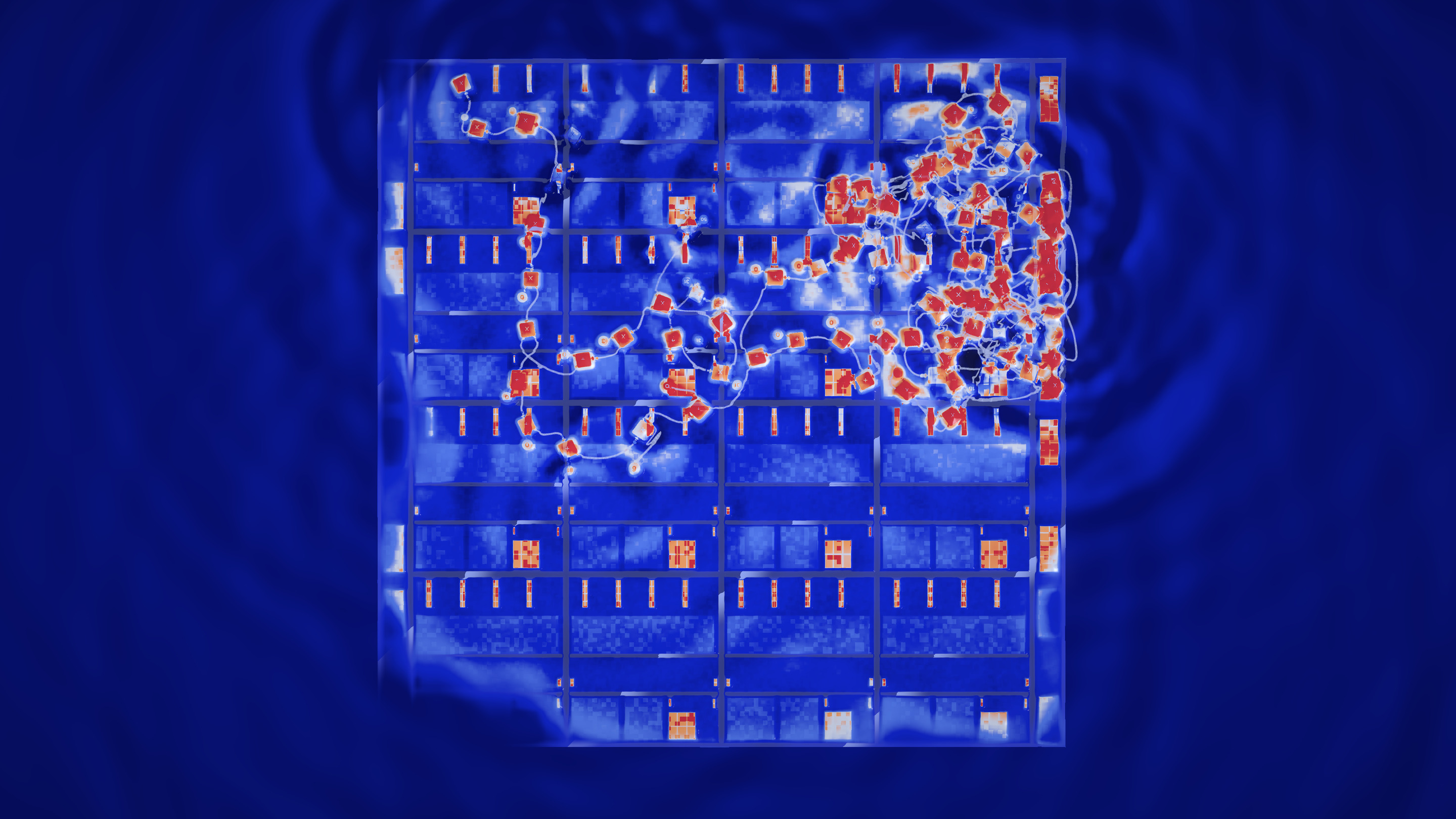
- Frostbite is a general-purpose CPU architecture created by AI, featuring a novel instruction set.
- The architecture leverages interaction nets, which allow for local computation and explicit dependencies, resulting in significant performance improvements.
- In tests with 25 workloads, Frostbite demonstrated a 4.59x increase in performance-per-watt compared to modern CPUs.
- The AI systems iteratively designed and verified the architecture, exploring various programming models and workloads.
- Frostbite's design eliminates the need for complex cache hierarchies and coherence protocols, reducing area and power consumption.
- The programming language Vine compiles to an intermediate representation called Ivy, which encodes the interaction net structure for efficient execution.
- The architecture allows for dynamic task management without a central scheduler, enabling efficient work distribution across the CPU tiles.
- The development process utilized a formal specification language, ASL, to ensure precise communication of architectural requirements and verification.
- Frostbite's design process involved multiple iterations and optimizations, leading to a final architecture that could influence future chip designs across various domains.
cpu architectureai designverificationfrostbiteinnovation